 |
A PRO-ACTIVE APPROACH TO WELLBEING
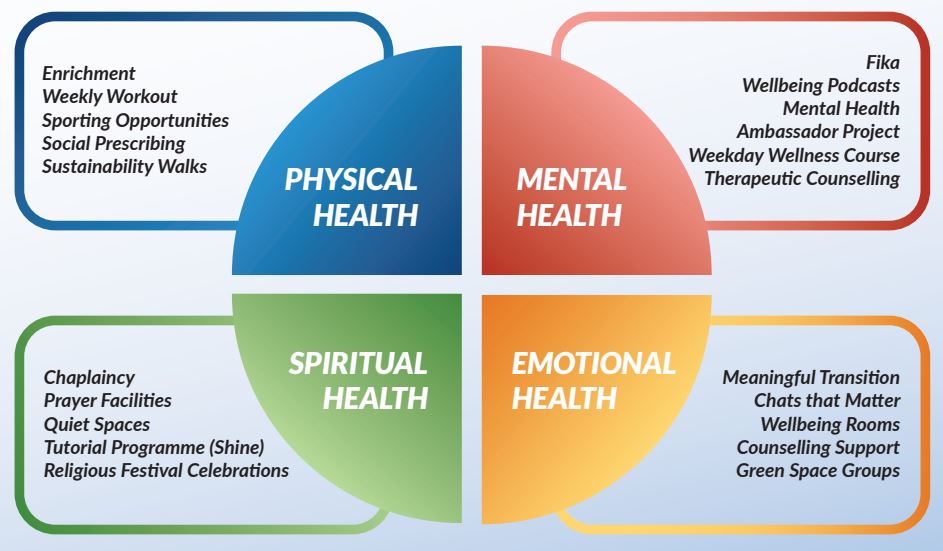
All students will have access to four strands of supportive
activities and interventions with a focus on positive wellbeing and prevention of ill health.
|
 A #WELLSTUDENT will:
- Seek opportunities to improve their health by participating in activities at College.
- Invest in good physical, mental, emotional and spiritual health to develop resilience and minimise poor health in the future.
- Promote our wellbeing agenda through engagement with events in College and beyond, helping us to develop a community of healthy young people.
#WELLSTUDENT Champions and Research Pioneers.
 Research Pioneers - Y12 Sleep Study.pdf
Abstract
Aim: The current piece of research aimed to investigate the different factors that could affect
students' sleeping habits and attempted to find evidence to support various strategies to improve
student sleep hygiene.
Method: The study used a sample of 18 Year 12 psychology students who were randomly allocated
to one of three conditions: (1) consistent bedtime (going to bed at the same time each night), (2) no
blue light one hour before bed (activating night mode on phones or avoiding screen use), and (3) no
food or drink (except water) two hours before bed. Students recorded their mood daily for one week
as a baseline, and again for a week while implementing their assigned sleep strategy. Differences in
mood were then compared and analysed.
Findings: Results indicated that no single strategy was statistically significant (p<0.05) in improving
mood before and after the strategy. However, students reported qualitative findings suggesting that
the implementation of strategies was easy (specifically in the no blue light condition). Importantly,
student’s awareness of their own sleeping habits and hygiene increased: students were actively
having positive, meaningful discussions with friends and family about sleep.
Conclusion: Further research and a larger sample size is needed for statistical significance, and
potentially sleep isn’t the only factor that can improve a student’s wellbeing. However, the research
does highlight the ease in which students are able to implement research-informed strategies to
improve their sleep hygiene. Furthermore, the study has prompted conversations between a group
of 16–18-year-olds about sleep, why it’s important and the things they can do to improve it. This
indirect positive influence remains the shining light of the research: by making students active
players in their own wellbeing, it encourages positive discussions which could potentially
permanently impact their mood.